
Welcome to my academic homepage. I am Yunlong Lin. I work on long-horizon agents that operate, learn, and improve in open-ended environments, with a focus on agentic reinforcement learning, harness design, and recursive self-improvement (RSI).
My research asks how agents can sustain open-ended work, learn from execution, and improve the systems around them:
(i) Long-horizon agent systems & harnesses: persistent state, memory, planning, tool use, and reliable execution across evolving workflows in JarvisHub, Claw-Eval-Live, and JarvisX-Cowork.
(ii) Agentic RL & environment feedback: trajectory rollouts, rubrics, verifiers, evaluator design, and harness generalization in Seed2.0, JarvisIR, JarvisArt, and Gen-Searcher.
(iii) Self-improving agents / RSI: Auto R&D and AI-for-AI through the joint evolution of skills, data, evaluators, and harnesses in the Seed2.1 Auto R&D Agent ("Seed-for-Seed"), JarvisEvo, and GenEvolve.
I welcome discussions and collaborations on long-horizon agents, agentic RL, harnesses, and recursive self-improvement.
-
 Jan 2026 – Present · Research Intern, ByteDance Seed
Long-horizon agent improvement through harness generalization, rubric/evaluator design, and Auto R&D ("Seed-for-Seed").
Jan 2026 – Present · Research Intern, ByteDance Seed
Long-horizon agent improvement through harness generalization, rubric/evaluator design, and Auto R&D ("Seed-for-Seed").
-
 Jun 2025 – Dec 2025 · Qingyun Intern, Tencent Hunyuan
Self-evolving agents through long-horizon interaction, reward feedback, and editor-evaluator optimization.
Jun 2025 – Dec 2025 · Qingyun Intern, Tencent Hunyuan
Self-evolving agents through long-horizon interaction, reward feedback, and editor-evaluator optimization.


ContributionWorked on the Auto R&D Agent and the "Seed-for-Seed" prototype, where rubrics and evaluators turn R&D outcomes into feedback for iterative agent self-improvement.
ContributionWorked on harness generalization and evaluator design, enabling agents to learn robust long-horizon behavior across changing interfaces and execution environments.
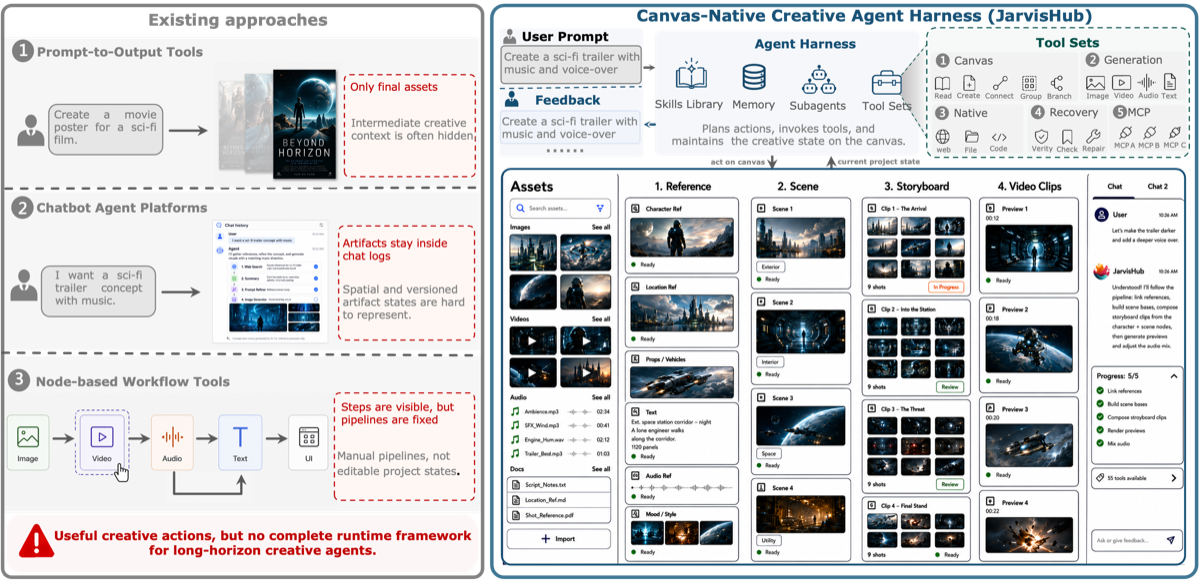

JarvisHub is an open harness for long-horizon agents. It provides persistent project state, structured actions, shared memory, and traceable environment feedback across open-ended workflows.
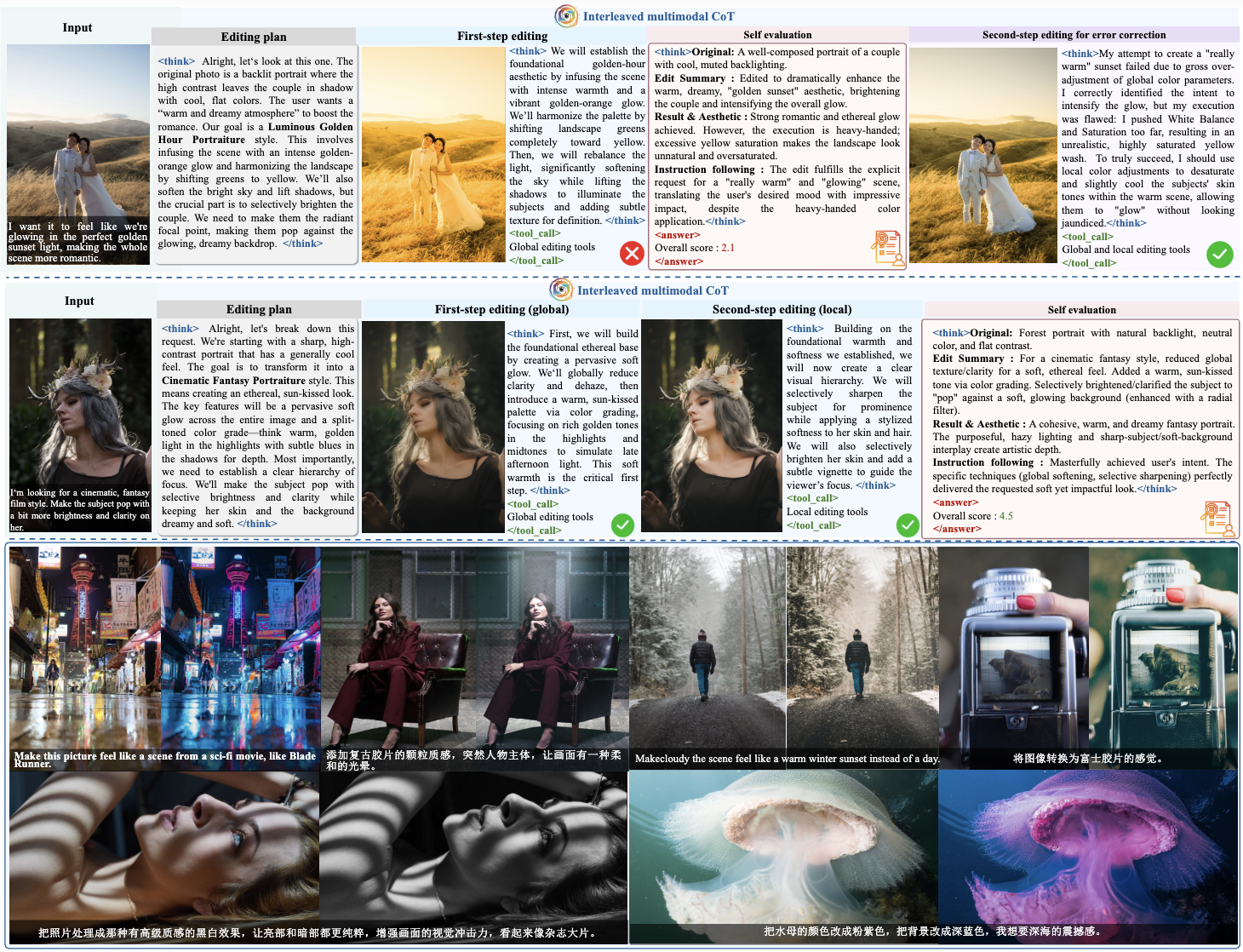

JarvisEvo studies recursive self-improvement through a coupled actor-evaluator loop. Long-horizon trajectories, reward feedback, and reflection allow the agent and its evaluator to improve together.
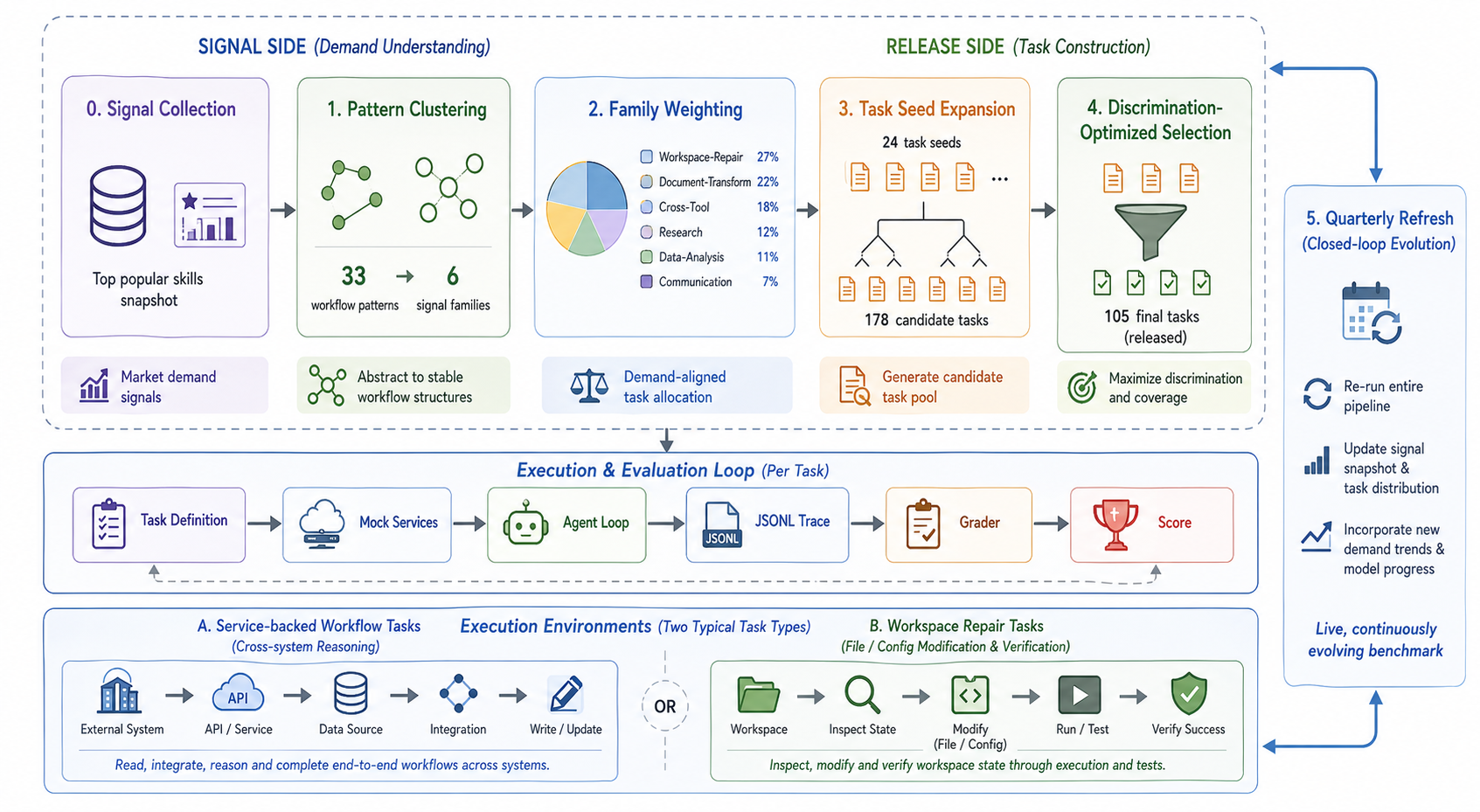

Claw-Eval-Live is a continuously refreshed benchmark for long-horizon agents in evolving real-world workflows. Verifiable execution traces and live tasks expose whether agents can generalize beyond static harnesses.

JarvisX-Cowork is an end-to-end harness for open-ended creative work. Persistent planning, shared memory, and structured tool interfaces help the agent carry state coherently from intent to final deliverables.
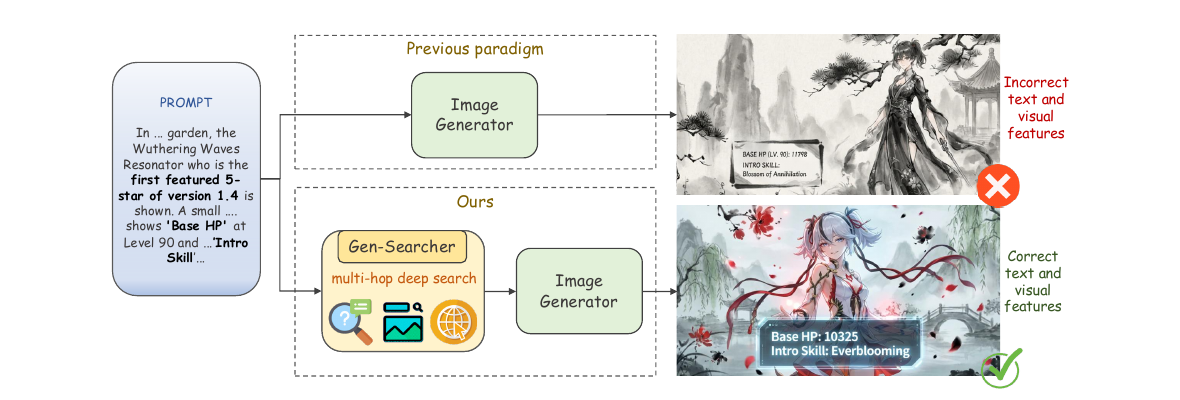

Gen-Searcher applies agentic RL to multi-step search and generation workflows. Search trajectories and environment feedback train the agent to gather evidence, revise decisions, and improve final outcomes.
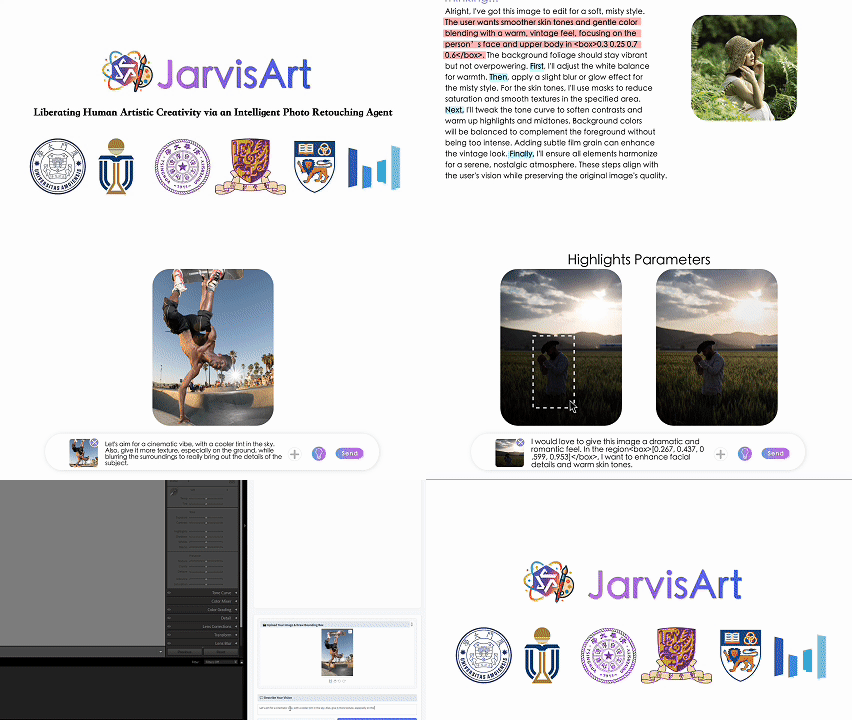

JarvisArt formulates expert-tool orchestration as a long-horizon agent problem. Interpretable subgoals, execution feedback, and iterative control support reliable multi-step workflows inside a professional editing environment.

JarvisIR post-trains a tool-using agent with mixed-rank reward feedback. The restoration stack serves as an execution environment in which the agent learns to plan, select, and coordinate experts for downstream objectives.